

Many people wonder whether Wisdom Teeth truly need to be removed in every situation, especially since these late-emerging molars can behave very differently from one person to another. Some individuals experience minimal discomfort, while others report pressure, gum irritation or changes in bite function. Because Wisdom Teeth develop in the back of the mouth where anatomical space is limited, their behavior depends on multiple structural and biological factors rather than a universal rule.
What Will You Read?
When Wisdom Teeth Grow Without Causing Problems
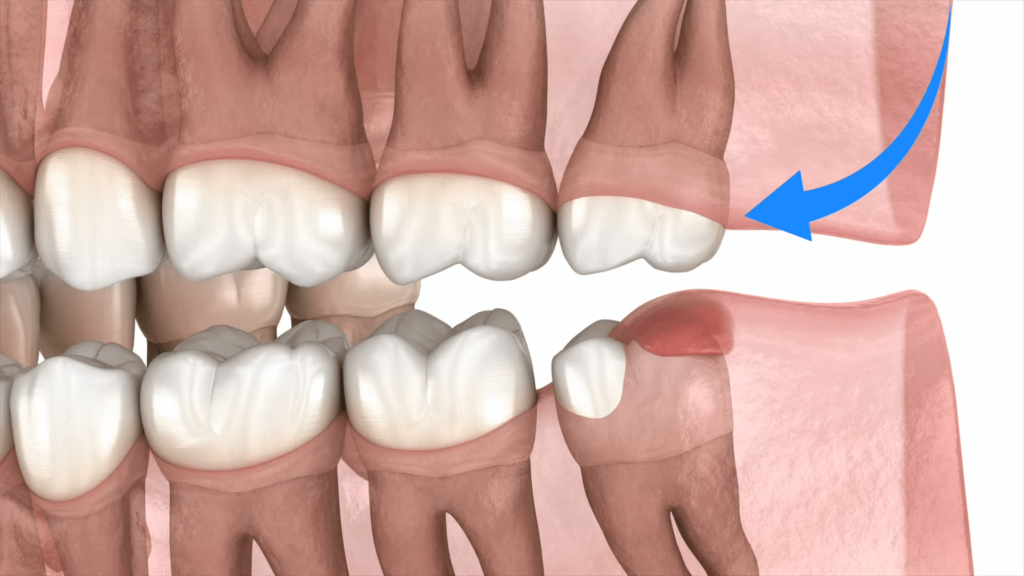
In a number of cases, Wisedom Teeth erupt fully and align naturally with the existing molars. When the jaw structure offers adequate space, these teeth can participate in chewing without disturbing the surrounding tissues. People with naturally wide jaws or balanced dental arches often fall into this category, which explains why their third molars remain symptom free for years.
Interestingly, dental anthropology research shows significant variation in jaw expansion patterns across populations. This suggests that the compatibility between third molars and jaw dimensions is not a simple matter of genetics but a complex mixture of developmental timing, bite function and craniofacial growth. As a result, even if two individuals share similar dental features, their experiences with Wisdom Teeth can differ dramatically.
How Impacted Wisdom Teeth Behave Over Time
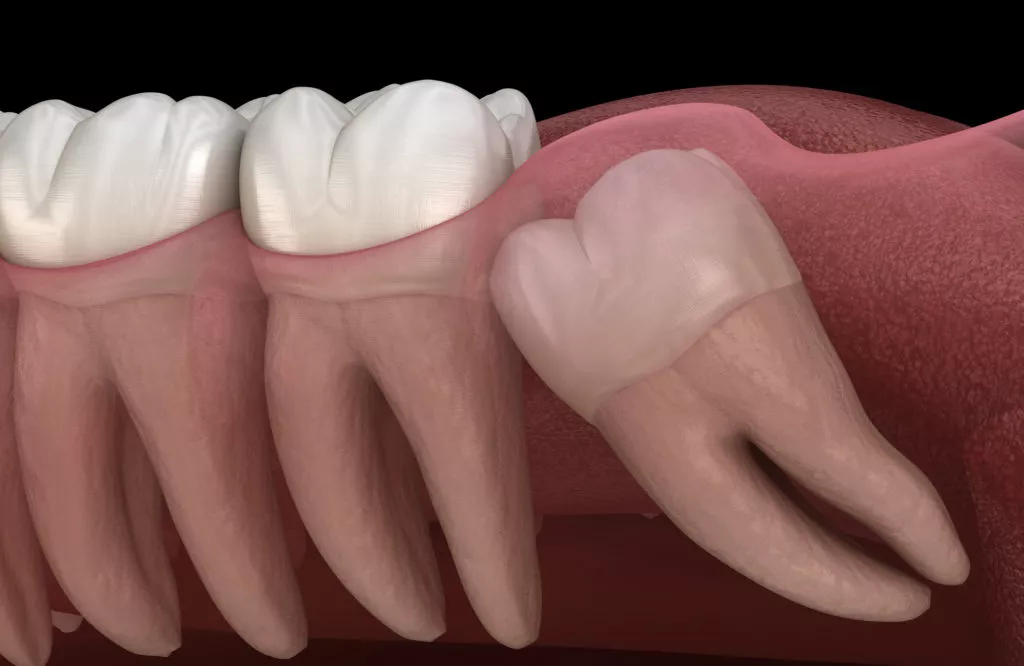
Impacted Wisdom Teeth present a different situation. These teeth may remain partially or completely covered by gum or bone, leading to unpredictable patterns. Some impacted molars never create discomfort, staying quiet for many years without shifting position. Others may exert mild pressure as they attempt to erupt at an angle.
The most intriguing part is that not all impacted molars cause clinical symptoms. Some remain stable in a fixed position, almost as if the jaw has accepted their presence. In contrast, minor positional changes in other cases may trigger localized sensitivity. The variance highlights the complexity of human dental development and why decisions related to third molars need individual assessment rather than generalized assumptions.
Why Some Wisdom Teeth Are Associated With Dental Crowding
People commonly assume that Wisdom Teeth directly push the front teeth forward. However, modern orthodontic studies indicate that crowding is usually more related to natural jaw growth limits rather than active pressure from the third molars. Still, in individuals with limited arch space, the presence of these molars may amplify the appearance of crowding even if they are not the root cause.
One study examining bite forces and molar angulation found that third molars show variable pressure profiles among individuals. Some people displayed measurable forces, while others showed almost none. This means anterior crowding cannot simply be attributed to Wisdom Teeth, and each case must be evaluated along a spectrum rather than a fixed rule.
A Simple Comparison Table
| Jaw Type | Potential Effect | Description |
| Wide jaw | Minimal impact | Third molars can align smoothly with the arch |
| Average jaw | Unpredictable effect | Individual differences determine crowding patterns |
| Narrow jaw | Increased crowding impression | Limited arch space exaggerates existing crowding |
Can Partially Erupted Wisdom Teeth Irritate the Gums
Partially erupted molars create small soft tissue pockets where food can accumulate. Depending on an individual’s oral hygiene and tissue response, these areas may develop intermittent sensitivity or irritation. The key point is that gum reaction varies. Some people adapt over time and experience fewer symptoms, while others remain sensitive to minor changes in the area.
Clinical observations suggest that these gum pockets behave differently depending on tissue elasticity, brushing patterns and even the person’s natural bacterial flora. That is why two individuals with the same type of partially erupted Wisdom Teeth might report completely different sensations ranging from mild awareness to occasional discomfort.
Do Wisdom Teeth Influence Jaw Comfort or Daily Function
Certain individuals report morning pressure or a dull sensation near the third molar region. This does not always indicate movement of the Wisdom Teeth. Jaw muscles can contract differently during sleep, especially in people who clench or grind. These muscular habits may exaggerate sensitivity in the molar region, creating the impression that the tooth is shifting.
Another interesting observation is the difference in how people interpret these sensations. Some describe vivid pressure even when no objective structural change is visible. This can be influenced by nerve sensitivity, stress levels and variations in how the trigeminal system processes signals. Daily comfort is therefore a combination of oral anatomy and neurological perception.
Examples From Everyday Life
• Someone may feel pressure only upon waking
• Another person may feel short bursts of discomfort at night
• A third individual may feel nothing for months, followed by a brief sensitivity period
These contrasting experiences show why Wisdom Teeth evaluations should be individualized instead of relying on absolute assumptions.
When Removal of Wisdom Teeth Becomes a Realistic Option
Not all third molars need removal but certain circumstances justify evaluating the possibility. These include recurring irritation, noticeable pressure, structural misalignment or difficulty maintaining hygiene in the area. The decision is rarely based on a single factor. Instead, it takes into account long term behavior of the tooth, changes in comfort level and the relationship between the molar and surrounding tissues.
One important point is that removal is not automatically recommended simply because a molar is impacted. Some impacted Wisdom Teeth stay stable and symptom free for decades. Others may show signs of tissue stress or positional changes that prompt closer monitoring. Understanding the difference requires a careful examination of individual anatomy rather than a fixed rule.
Every Set of Wisdom Teeth Tells a Different Story
In summary, Wisdom Teeth do not behave the same way in every person. Some remain functional and stable, others shift slightly or create occasional irritation, and some remain deeply impacted without any long term effects. The diversity in experiences highlights the importance of evaluating third molars based on personal anatomy, comfort and lifestyle factors.
DentRoute’s perspective emphasizes that the best approach is an individualized one. The essential question is not whether all third molars should be removed but how each specific set of Wisdom Teeth interacts with the person’s jaw and overall comfort.

 Dijital Performans Ajansı.