

When it comes to straightening teeth and achieving an ideal smile, many people face the dilemma of Braces vs. Invisalign. Both methods are widely recognized in orthodontics, yet they differ significantly in terms of mechanics, aesthetics, and lifestyle compatibility. Understanding the nuances of each approach can help you make a well-informed decision based on personal preferences, oral health needs, and long-term results.
What Will You Read?
Understanding Braces vs. Invisalign: A Comparative Overview
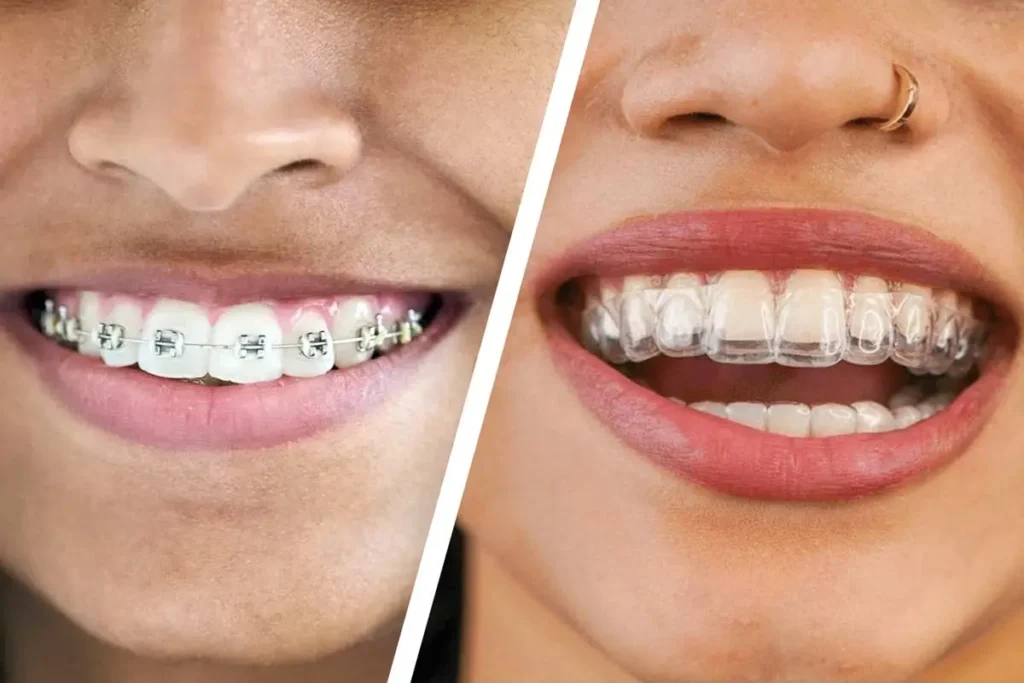
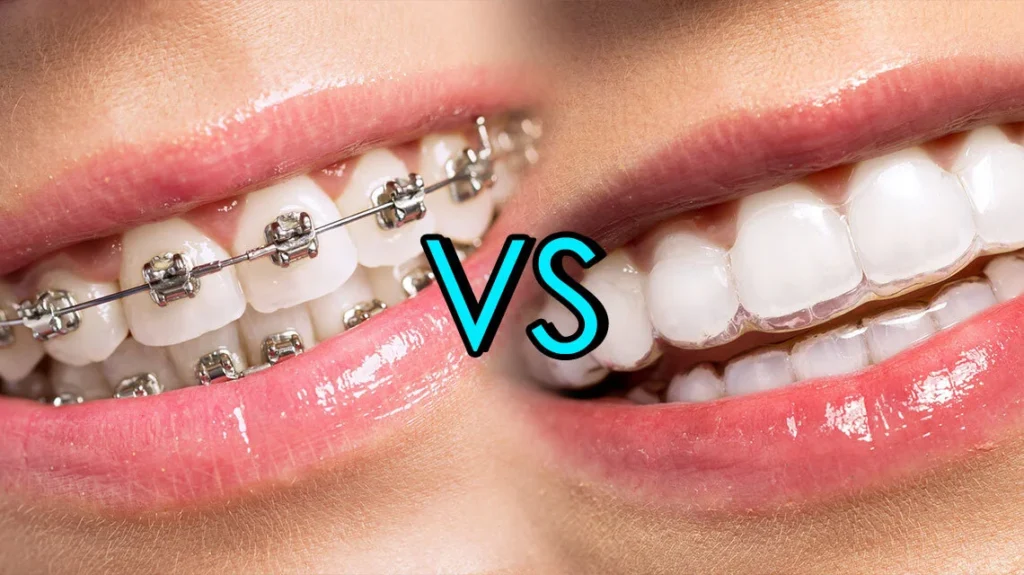
The primary distinction between Braces vs. Invisalign lies in their visibility and method of application. Traditional braces use metal or ceramic brackets bonded to the teeth, connected by wires and sometimes elastic bands. This creates constant pressure to move teeth gradually into alignment. On the other hand, Invisalign employs a series of clear, removable aligners that are custom-fitted to gently shift teeth over time.
In clinical studies, both systems demonstrate effective results for mild to moderate malocclusions. However, certain severe dental misalignments may respond more predictably to traditional braces. Despite these differences, patient compliance is a critical factor for Invisalign to be successful, as the aligners must be worn 20–22 hours daily.
Aesthetic Considerations in Braces vs. Invisalign
Aesthetic appeal is often a decisive factor for patients choosing between Braces vs. Invisalign. Clear aligners are nearly invisible, making them particularly appealing to adults and teens who are concerned about appearance during treatment. Braces, while more conspicuous, have evolved with ceramic and self-ligating options to reduce visibility and improve comfort.
Psychological studies suggest that the visual presence of braces can influence self-esteem, especially in social or professional settings. Invisalign’s discreet design often provides greater confidence during public interactions. However, some individuals prefer braces for their predictability and the perception of “visible progress” as adjustments are made by orthodontists.
Treatment Duration and Efficiency in Braces vs. Invisalign
When analyzing Braces vs. Invisalign, treatment length is an essential consideration. Traditional braces generally require 18–36 months depending on complexity, whereas Invisalign treatment averages 12–24 months. Technological advancements in both methods, such as 3D imaging and smart brackets, have optimized movement efficiency.
Research indicates that minor tooth movements may be completed faster with Invisalign due to the precision of digital planning. Conversely, braces tend to manage complex rotations, bite corrections, and severe spacing issues more reliably, often without additional refinements. Patients must weigh the trade-off between convenience and versatility when deciding on their preferred treatment.
Comfort and Oral Hygiene in Braces vs. Invisalign
Comfort and ease of maintenance are critical factors in the Braces vs. Invisalign debate. Braces can cause irritation to gums and cheeks due to brackets and wires, and oral hygiene requires meticulous brushing and flossing to prevent plaque accumulation. Invisalign aligners, being removable, simplify cleaning and allow patients to maintain regular oral hygiene routines without specialized tools.
A 2022 study in the Journal of Orthodontics noted that Invisalign users reported significantly less discomfort during the first week of treatment compared to those with traditional braces. However, aligners must be consistently worn, and failure to do so can prolong treatment, highlighting the importance of patient responsibility.
Cost Analysis of Braces vs. Invisalign
Financial considerations are often decisive in choosing between Braces vs. Invisalign. Braces generally cost between $3,000 and $7,000 depending on material and duration, while Invisalign can range from $4,000 to $8,000 due to the custom manufacturing process and digital planning.
Insurance coverage may partially offset expenses for either option, though adult orthodontic benefits vary. Cost-benefit analyses should consider not just the price but also convenience, potential retreatments, and lifestyle impacts. For instance, aligner replacement due to loss or damage can increase Invisalign costs, whereas braces usually involve fewer unforeseen expenses once applied.
Lifestyle and Dietary Factors in Braces vs. Invisalign
Lifestyle adaptation is another major aspect when comparing Braces vs. Invisalign. Braces impose dietary restrictions, prohibiting hard, sticky, or chewy foods that can damage brackets. Invisalign users, in contrast, can remove aligners while eating, maintaining normal dietary habits.
Athletes and performers may prefer Invisalign for reduced risk of injury and interference during practice or performances. Braces may require additional protective gear for contact sports. These practical considerations often influence the decision beyond purely dental outcomes.
Scientific Insights and Research Trends in Braces vs. Invisalign
Emerging research in orthodontics continues to evaluate the efficacy of Braces vs. Invisalign. Recent studies indicate that digital treatment planning for Invisalign has improved predictability in complex cases, though braces remain the standard for certain bite corrections. Long-term follow-ups suggest comparable stability in tooth alignment for both methods when treatment protocols are properly followed.
Advanced imaging and 3D scanning technologies allow practitioners to simulate outcomes, enabling patients to visualize post-treatment results with high accuracy. The integration of AI-driven monitoring also promises more precise adjustments, reducing treatment time and enhancing patient satisfaction for both systems.

 Dijital Performans Ajansı.