

The term Supernumerary Teeth often surprises people because it sounds like a rare biological anomaly, yet having extra teeth is more common than most expect. These additional teeth can influence alignment, oral balance, eruption timing, and overall dental harmony. Understanding the science behind extra teeth helps patients and clinicians interpret how they form, why they vary so much, and what their presence may mean for long term oral structure.
What Will You Read?
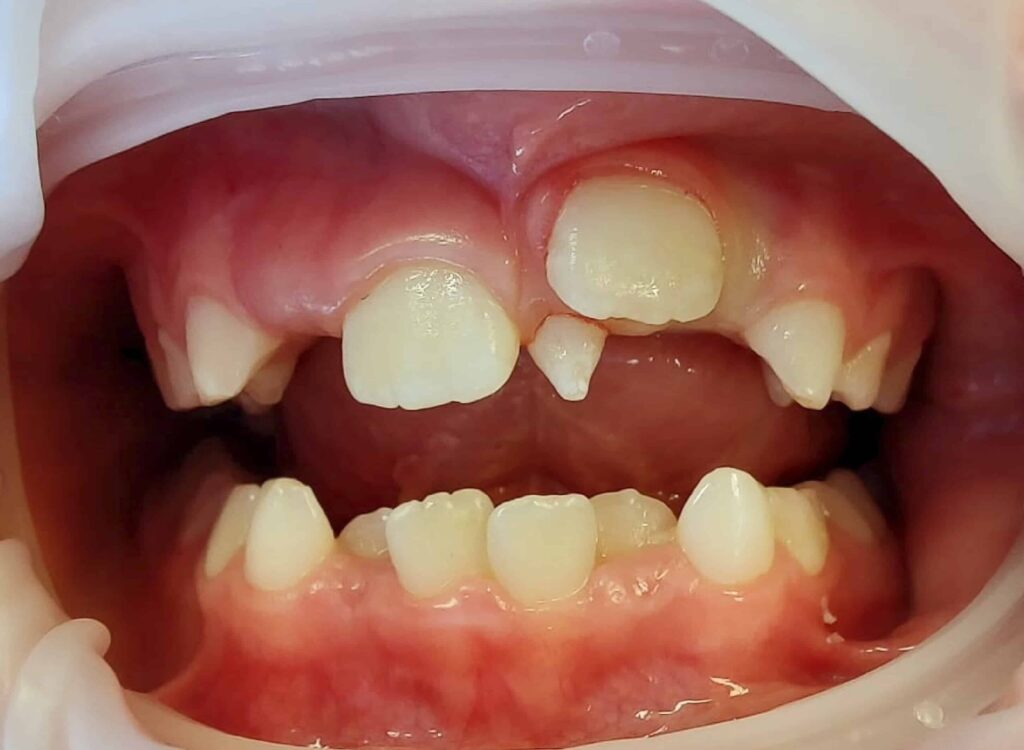
Understanding Supernumerary Teeth and Early Development
The appearance of Supernumerary Teeth is believed to be linked to developmental signals during tooth formation. When the dental lamina receives irregular developmental cues, an extra tooth bud may form. Researchers examining craniofacial biology explain that even small variations in these signals can produce additional teeth, often in unexpected positions.
Although the causes are not fully mapped, studies point to a combination of genetic influence and local tissue conditions. Some extra teeth appear similar to natural ones while others show irregular shapes, hinting at differences in how their cells organize during formation. These variations make every case unique and clinically interesting.
Types of Supernumerary Teeth Based on Location and Form
Clinicians categorize Supernumerary Teeth based on location or shape. Location based types include mesiodens, which appear between the upper front teeth, paramolars near molars, and distomolars that form behind the final molars. Shape based classifications include conical, tuberculate, supplemental, and composite forms.
These categories help clinicians predict how each extra tooth might behave. Conical types often erupt more easily while tuberculate forms stay impacted. Supplemental types resemble regular teeth and sometimes blend into the dental arch without causing disruption. Understanding these differences enhances diagnosis and helps anticipate long term behavior.
How Supernumerary Teeth Influence Alignment and Oral Function
Depending on where they occur, Supernumerary Teeth can alter alignment and crowd adjacent teeth. The most frequent issue is eruption blockage, where an extra tooth occupies the pathway of a permanent tooth. This can delay eruption, push teeth sideways, or create unexpected rotation patterns.
Some extra teeth never erupt at all and remain hidden deep within the bone. Even in this silent state, they may apply pressure on roots or modify the growth trajectory of neighboring teeth. These subtle changes can accumulate over time and create later alignment problems. Because of this, early observation during growth years can be useful when monitoring dental development.
Diagnostic Techniques for Supernumerary Teeth
Detecting Supernumerary Teeth relies on multiple imaging methods. Standard radiographs provide initial insight while digital tomography offers three dimensional clarity. These views help clinicians assess root formation, angulation, and proximity to vital structures.
Advanced imaging is especially valuable when an extra tooth lies near a nerve canal or when its orientation is reversed, horizontal, or fused to another structure. The diagnostic process also evaluates whether extraction is necessary or whether the extra tooth can remain if it is stable, harmless, and not interfering with surrounding teeth.
Treatment Approaches and Clinical Considerations
Treatment for Supernumerary Teeth varies widely depending on age, eruption status, and structural impact. Extraction is common but not always mandatory. Some supplemental extra teeth are fully aligned and cause no functional disturbance, making observation a reasonable choice.
When extraction is recommended, the procedure is often simple if the extra tooth is near the surface or has incomplete root formation. Deeply positioned teeth may require a more strategic approach. Many adults also combine extraction with orthodontic therapy to address long standing crowding or displacement that developed over many years.
Example Table Illustrating Potential Effects
This table highlights general patterns observed in clinical evaluations
| Area Affected | Possible Impact |
| Front teeth | Crowding or delayed eruption |
| Posterior teeth | Bite imbalance or spacing changes |
| Root alignment | Pressure driven angulation shifts |
Hidden Supernumerary Teeth and Silent Structural Changes
In some individuals Supernumerary Teeth stay completely hidden and cause no visible symptoms. They may remain impacted throughout life. Their presence is usually discovered during routine imaging performed for unrelated reasons.
Although silent, hidden extra teeth can still influence long term tissue behavior. Even small, slow pressure on roots or bone can alter the natural relationship between teeth. Because these shifts may take years to appear, periodic monitoring helps confirm that the hidden tooth is stable and not triggering gradual displacement.
Supernumerary teeth represent a fascinating intersection of genetics, developmental biology, and dental anatomy. The presence of Supernumerary Teeth reveals how complex dental formation truly is. Each extra tooth, whether erupted or hidden, carries its own unique form, orientation, and effect on surrounding structures. Studies show that these teeth vary widely and that no two cases look exactly alike.
Understanding the types, developmental background, and diagnostic features of extra teeth provides meaningful insight into oral architecture. Their influence may be subtle, dramatic, silent, or gradual. DentRoute approaches this topic by blending scientific observation with practical analysis to offer readers a reliable and thoughtful perspective.

 Dijital Performans Ajansı.